
D³4Health
Driven Diagnostics, Prognostics, and Therapeutics for Sustainable Health Care
D34Health Project: Digital Innovation for Sustainable Health
TAGS: #AI, #DigitalTwin
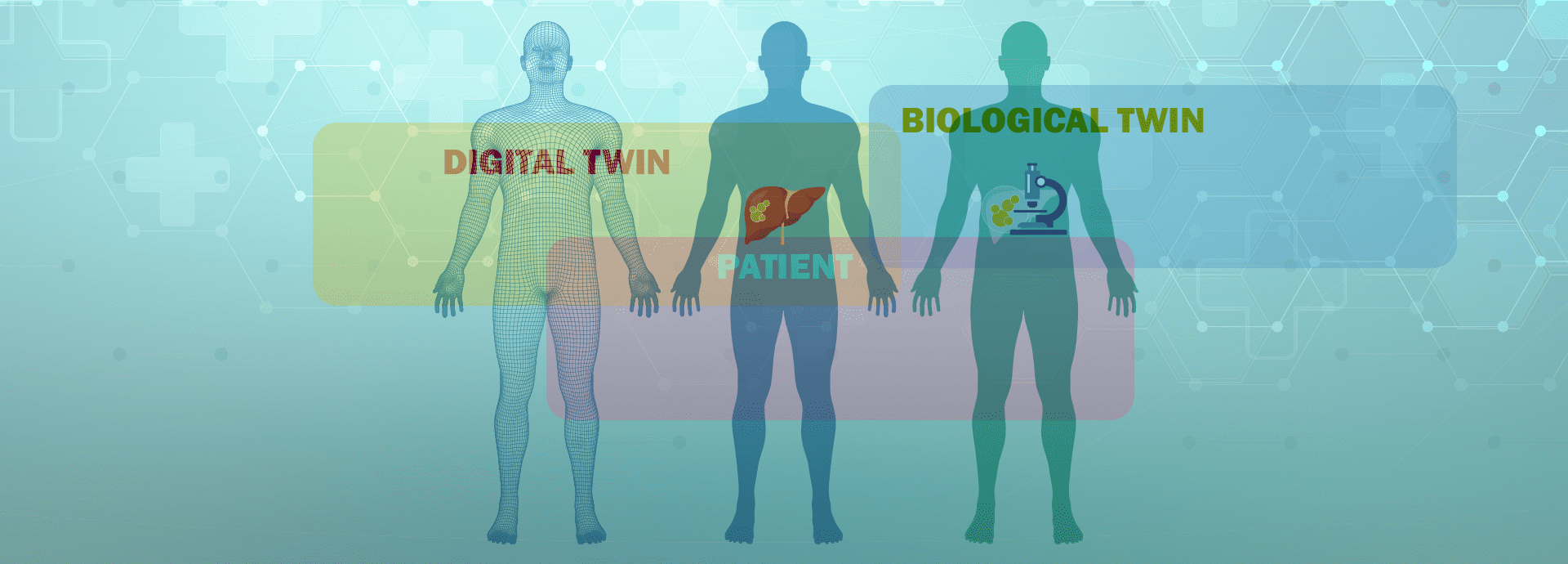
The D34HEALTH project aims to develop digital and biological twinsusing a data mining approach. These twins will be created using health data collected and analyzed through artificial intelligence (AI) algorithms on a multilevel platform, integrating wearable devices, sensors, and biomarkers for the monitoring, diagnosis, and treatment of five target diseases:
- metastatic colon cancer
- Liver and Bile Duct Cancer
- central nervous system cancer
- type 1 diabetes
- multiple sclerosis
The project aims to transform and advance current methods for the diagnosis, monitoring, and treatment of these diseases by leveraging the precision medicine approach. The adoption of innovative, non-invasive technologies and the analysis of digitized health data will improve health management and reduce the need for hospital visits, while also creating intelligent decision-support systems for caregivers.
Specific Objectives:
- Development of Interoperable Platforms: Creation of platforms for collecting and analyzing health data to develop machine learning (ML) models for use in a hospital setting.
- Integration of innovative devices: Development of wearable devices, sensors, and biomarkers, supported by AI-powered digital tools, to improve diagnosis, monitoring, and treatment.
- Creating digital and biological twins: Identifying homogeneous clusters of patients for each disease, using integrated data to simulate and predict individual clinical outcomes.
- Predictive Simulations for Personalized Therapies: Use of digital models to generate predictions about therapies and therapeutic responses, validated through in vitro models and advanced monitoring technologies.
Impact and Sustainability:
The D34Health project aims to significantly improve the management of target diseases, reducing costs for national health care systems and contributing to the creation of a more sustainable and efficient health care system. Through the use of digital and biological twins, the project has the potential to revolutionize the way diseases are treated, offering more personalized and precise solutions for each patient.
Spokes
Research Activities and Methodology of the D34Health Project
The D34Health project is structured around four main areas (spokes), which are interconnected to achieve specific objectives and apply them to the five target diseases: metastatic colon cancer, liver and biliary tract cancer, central nervous system cancer, type 1 diabetes, and multiple sclerosis. Each research area contributes to the project in a complementary manner, with validation, development, and implementation activities taking place at both the technical and translational levels.
The Four Research Areas (Spokes)
Track 1: Clinical use cases and new models of care supported by AI/e-health-based solutions – Coordinated by the University of Milan
Development and validation of innovative care models, supported by AI-based e-health solutions, using data collected retrospectively and prospectively to ensure rapid availability of results.
Spoke 2: Multilayer platform to support the creation of the Patient’s Digital Twin – Coordinated by the University of Salerno
Use of an existing platform to support data storage and the creation of the patient’s digital twin. This will enable the creation of an interoperable virtual infrastructure among the consortium’s centers, ensuring compliance with the GDPR for data exchange.
Track 3: Wearable Technologies, Sensors, and Biomarkers for Care Through Digital Twin Approaches – coordinated by Sapienza University of Rome
Development and validation of new wearable technologies andsensors for monitoring and therapy, includingbiomarkers derived from liquid biopsies and imaging, which support clinical decision-making and the continuous collection of data for the creation and evolution of the patient’s digital twin.
Spoke 4: Biological and bioengineered in vitro models for care through Digital Twin approaches – coordinated bythe Polytechnic University of Turin
Development of biological models for the validation of the biological twin, integrating simulations based on biological data to improve the accuracy of therapeutic predictions
Interdisciplinary Methodology and Holistic Approach
The D34Health project takes an interdisciplinary approach that brings together diverse expertise and professional backgrounds, including doctors, biologists, artificial intelligence experts, and computational infrastructure specialists. This cross-sector collaboration fosters the creation of innovative solutions to address health challenges. Furthermore, tackling multiple diseases with a shared digital strategy enables the development of common methodologies and infrastructure, increasing efficiency and raising global awareness.
The D34Health project is committed to ensuring user-centered design by actively involving all stakeholders through five key principles (ForUSER): dialogue with users, understanding their needs, supporting their goals, user-friendly digital interfaces, and consistency in the proposed solutions.
This integrated and comprehensive approach aims to address complex health issues by using technology to create scalable and sustainable solutions, always placing the patient and their needs at the center.
National and International Collaborations
The D34HEALTH consortium is part of numerous national and international collaborations with research institutions, hospitals, universities, and technology companies. The partners actively participate in European and global networks, promoting research, personalized medicine, and digital interoperability. These collaborations include prestigious organizations such as the New York Genome Center, the Dana-Farber Cancer Institute, and Microsoft, as well as numerous Italian research centers. These partnerships foster innovation and the development of advanced solutions for digital health.
Quality of Education
The D34HEALTH project promotes interdisciplinary training in the field of artificial intelligence applied to healthcare, aimed at healthcare professionals, IT specialists, and patients. Through training courses, webinars, and exchange programs, professionals acquire the skills needed to integrate AI into their daily practices. In addition, the project supports the next generation of experts by creating master’s and PhD programs focused on AI, personalized medicine, and technological innovation. These initiatives ensure a solid foundation for addressing the challenges of digital healthcare.
Information
Project PNC 0000001 D³4Health
CUP B83C22006120001
National Plan for Investments Complementary to the PNRR, funded by the European Union – NextGenerationEU
Start Date: December 1, 2022
End Date: November 30, 2026
Artificial Intelligence, Digital Twin, Diabetes, Multiple Sclerosis
Partners
Sapienza University of Rome
Bambino Gesù Children’s Hospital
Neuromed – Mediterranean Neurological Institute
Hospital Physical Therapy Institutes – Regina Elena National Cancer Institute
Federico II University Hospital of Naples
University of Turin
IRCCS Sacro Cuore Don Calabria
Siena University Hospital
University of Molise
IRCCS CROB
Magna Graecia University of Catanzaro
University of Salerno
Vita-Salute San Raffaele University
Bruno Oncology Foundation
AizoOn
CINECA – Interuniversity Consortium for High-Performance Computing in Northeastern Italy
IRCCS Galeazzi – Sant’Ambrogio
Euro-Mediterranean Institute of Science and Technology
European Institute of Oncology
Polytechnic University of Bari
Porini SRL
Telethon Institute of Genetics and Medicine (TIGEM)
National Research Council
Polytechnic University of Turin
National Institute of Health
Local Health Authority 3 Nuoro
IRCCS Institute of Candiolo
D³4Health
Project PNC 0000001 D³4Health | CUP B83C22006120001 | National Plan for Investments Complementary to the PNRR, funded by the European Union – NextGenerationEU